|
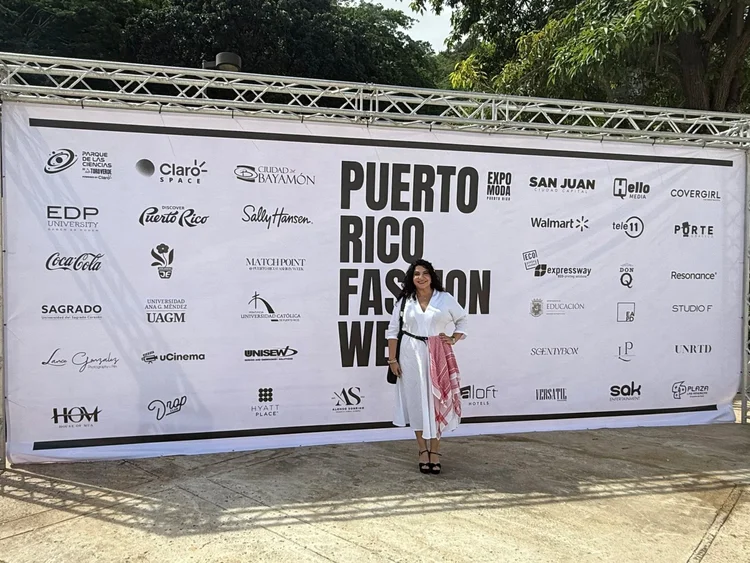
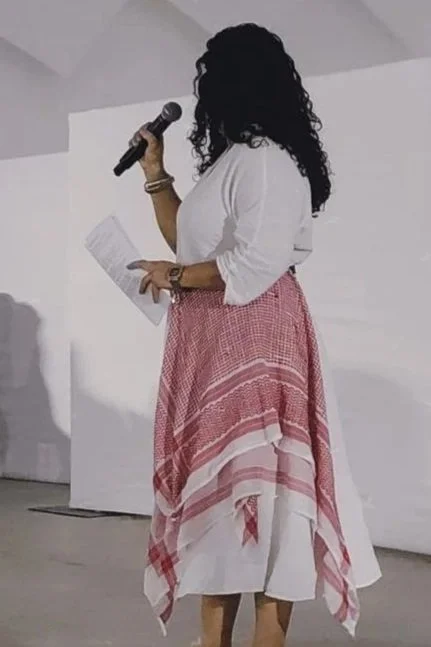
On October 7, 2025, I was invited to speak about the academic offerings at Universidad del Sagrado Corazón during an event that brought together high school students from technical schools across Puerto Rico that teach sewing and prepare young people to explore fashion design. Of the four universities on the island offering bachelor’s degrees in fashion design, Sagrado is the only institution with a curriculum centered on entrepreneurship, sustainability, and circularity — all essential pillars for building a resilient and future-ready fashion ecosystem. When you really break it down, Puerto Rico’s entire fashion pipeline is still very small: our emerging designers and their ateliers, the seven remaining military garment factories, the last two sewing cooperatives, the four fashion programs, and the roughly 70–80 students graduating from all of them each year. At Sagrado, we will soon graduate our first class — just over twenty talented students — and we currently welcome about 80+ new students into the program each year. In total, we are talking about fewer than 5,000 people actively positioned to shape the future of fashion on the island. My biggest concern remains: Where do these students work once they graduate? If universities are not training them to build the ecosystem they need in order to thrive — one that still does not fully exist — and they are also not preparing them to compete with graduates from New York, Paris, or London, then what exactly are students receiving in exchange for such costly degrees? Some of these programs have been operating for over a decade — more than enough time to plant seeds, build industry infrastructure, and create real pathways. Yet, we continue to see graduates specializing in eveningwear, bridal, and prom dresses — beautiful work, but extremely limited economically — and very little development in ready-to-wear, accessories, loungewear, or more sustainable and scalable categories. And the structural problem remains: apart from seven high-volume military factories ( you may remember I used to work in one of them, that closed abruptly in 2024) and two aging cooperatives that are nearing retirement, Puerto Rico does not have local manufacturing capable of producing these collections. Designers either have to build their own micro-factories and train talent themselves, or leave the island to produce in other countries — a difficult and expensive path for a small emerging brand. Factories require minimums; graduates often lack training in technical development, pattern grading, and sample execution; and many students today have become disconnected from the fundamental reality that our clothes are still made by human hands. Robots do not yet sew our garments. Every morning when we get dressed, it is thanks to a garment worker somewhere in the world. This is why I become so deeply frustrated when academic institutions push expensive fashion degrees without simultaneously working to build the industry that would allow these graduates to succeed. My colleagues at Sagrado and I are choosing a different path, based on our own experiences as entrepreneurs. We are building a program grounded in true skill-building, business creation, ethical and circular values, and industry development. As we prepare to graduate our first cohort, time will tell — but we are planting seeds for a future where Puerto Rican designers not only dream, but also build, employ, and manufacture here at home. So, back to the talk I gave at Puerto Rico Fashion Week. Instead of recruiting students by claiming we are “better” than other universities, I chose a different path. I offered a mini-lecture on the industry these young people hope to enter — an industry full of creativity, yes, but also one in urgent need of transformation. I spoke about what sustainability truly means in fashion — not just recycled fabrics or marketing language, but an approach that considers people, planet, and prosperity. I reminded them that in Puerto Rico, where half of our landfills are under closure orders or not fully compliant, textile waste is not an abstract issue — it is a daily, physical reality on our island. Sustainability here means thinking about circularity, respecting labor, building local capacity, designing responsibly, and imagining a future where our creative talent can thrive without harming the environment or relying on extractive systems. I’m not sure how much of that message landed — they were understandably dazzled by the gowns and elaborate costumes on stage, many created by students from other programs. Beauty moves us, and it should. But beyond beauty, I wanted them to see possibility — the possibility of building an industry that does not yet exist here, but desperately needs to. I highlighted the incredible professors I teach alongside at Sagrado — professionals who not only talk about sustainability but practice it, build it, question it, and evolve with it. My hope is that the students who choose Sagrado come with a genuine desire to help construct the ecosystem their future depends on — an ecosystem capable of supporting not just their careers, but those of generations to come. I know, because I tried to build pieces of that ecosystem myself through Retazo back in 2020 — and the work continues.
|